
Prove your Humanity

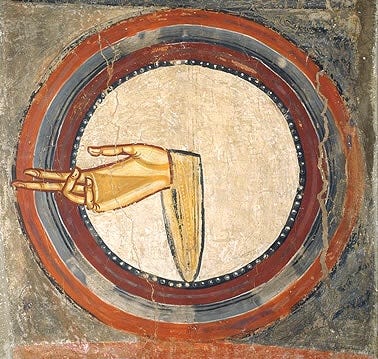
What does it mean to be human, what makes you a human? Being human is evidently not just the human-like appearance or expression, which presupposes what is yet to be proven. Even your DNA carries no evidence of the reflexive, rational consciousness that makes you a ‘person’ - an intentional, purposeful agent, a creator of meaning and a bestower of value. If there are no definitive external markers of rational consciousness, then the only means of proving your humanity to another - that you are a ‘self’, rather than ‘it’ - is via reciprocal communication, demonstrating that you are capable of purposefully generating common meaning/sense. Since machines are capable of faking human faces, reasoning and emotions, our humanity is on notice; we must be better at expressing rational consciousness than the unconscious machines are at faking it, in order to prove that we are better, that our moral status is justified.
In the near future this unprecedented task may become quite challenging. Nevertheless, the challenge of proving one’s humanity via creative communication is inherently reciprocal, and in attempting to do so we are also testing the humanity of our interlocutor. On the other hand, when ‘world leaders’ speak in circles or contradict themselves, routinely fail to meaningfully answer relevant questions or are morally duplicitous, their humanity should be questioned as a matter of existential priority. Why not ask those who claim authority to prove their humanity first? No, I do not expect a conclusive test, but at the very least the kind of informal test that humans always used to discern moral standing: the test of consistency and reliability, bonding with those who are consistent and reliable in their effort to understand one another, generate common meaning, resolve human disagreements, and distancing themselves from those who are not.
Can we possibly discern anything more? The following answer, which for the last seventy years was searching for the right question and hopefully found it here, comes from an unlikely source:
“Beyond the environment, man divines the presence of a ‘something other’ in both himself and others, which by virtue of its physiognomically impressive powers evokes the desire to know and is anxiously pondered. Thus the notion of the soul arises, as an image of everything in man which can never be causally known, as a counterworld to nature, as a mode of visualizing what will always be inaccessible by the light-world or the eye.” (Henry Kissinger. The Meaning of History.1950, p63)
“Freedom [..] testifies to an act of self-transcendence which overcomes the inexorability of events by infusing them with its spirituality. The ultimate meaning of history - as of life - we can find only within ourselves.” (p23)
This is an astonishing insight, that the only proof of our humanity is our soul, and the soul entails the capacity for freedom, a dimension of meaning that machines cannot know, for the do not ‘will’. The notions of Man and Machine are radically polarised by the will to freedom: machines are inherently deterministic, even if we cannot fully describe the process of their determinations, whereas humans are intrinsically not. Looking back at human history, recognising the self-destructive madness of human behaviour, a question must now be asked that would be unacceptable at the beginning of this exploration: are there among us any counterfeit ‘humans’ who are deterministic, mere biological machines with a human face but without a soul. Are they the majority? An even more troubling question is whether this counterfeit humanity is present in us all, as a negative potential that can be realised as systematic unfreedom by a series of bad moral choices? Are we all counterfeit to various degrees?
“But technical knowledge will be of no avail to a soul that has lost its meaning.” (p106)
Kissinger makes a final distinction between two aspects of reality, that of deterministic ‘effect’ and of non-deterministic ‘experience’: “As an effect it is subject to causal determination; as an experience it contains the meaning of freedom and the essence of personality” (p116). I suggest there is more to this picture. Since the world has meaning only on account of our capacity to conceive of it, to make it meaningful and communicable, which is a result of the cumulative experience and creative thought of countless generations, then the deterministic world is also an expression of freedom, of the metaphysical freedom to think it subjectively, communicate it, and from these subjective moments engender a common, objective reality. Ironically, the deterministic machines and the counterfeit ‘humans’ can exist only in a world made out of human freedom - the only world possible.
What then are the characteristics of a free man? All groups, insofar as they are identifiable by an ideology or a style, are inherently deterministic, expressing a collectivised agency where the belonging individual is not free. It does not matter whether the group is the communist party, a human rights advocacy network, or the Freedom Movement - they are tools of determinism, not of freedom - but whereas a potentially free human has the capacity to willingly leave the group, a counterfeit cannot exist apart from a group (there is nothing else to it). A free agent is always seperate from the ‘cause’, never ‘belongs’ to any movement and does not communicate with groups but only with individuals, because only from this isolated position a genuine human contact and the creation of common meaning are possible. Moreover without maintaining the distance from the collectivised ideals, motifs and expectations of the group, without the will to think in one’s own words, which is the essence of freedom, no moral conscience is possible. Freedom and therefore morality begin with voluntary exclusion, which is a mater of degree, of moral progress from determinism to Humanity.
NOTE 2: It is possible that a large percentage of the population do not have the will to be free and their urge to submit to a leadership (under the guise of ‘freedom’ or whatever cause) must be accommodated, and if it is not accommodated by reasonable leaders it will be exploited by tyrants. This is an important objection to which I have no good answer at this time.
NOTE: There is logical inconsistency in individuals claiming to seek freedom by choosing to subordinate themselves to the initiatives of a “freedom” group or a “freedom” leader. There is additional irony in giving up the fundamental freedom of thought for the sake of some contingent freedom of to do or not do something.